The rules behind the ridiculousness
Ethical
game design.
Play the feud.
Respect the friend.
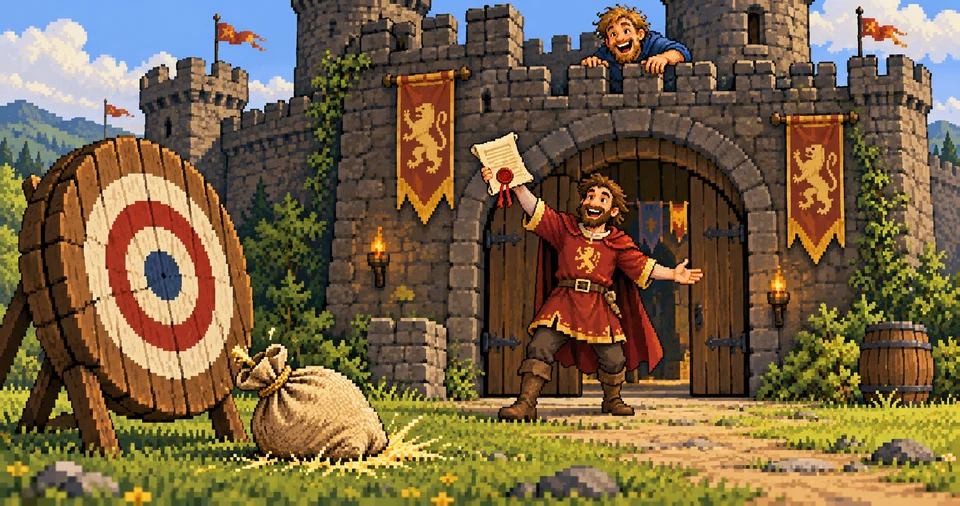
A virtual sack should start a shared laugh, not a campaign against someone who has stopped enjoying it. Katanero’s rules are designed to put pauses, choices and limits between the joke and the person receiving it.
A friendly rivalry needs room to stop.
Five choices built into the design
The drawbridge belongs to the defender.
These are the current rules documented for the game server. They apply differently to friendly targets and the game’s fictional enemies.
01
A hit raises the drawbridge.
After a successful personal hit, the recipient is protected from further ordinary attacks while that hit remains unanswered. The pause is not a daily timeout: it does not disappear just because midnight arrives.
02
Returning fire is a choice.
To end that protection, the recipient must land a successful return hit on the player who hit them. Missing, or hitting an unrelated player, does not lift it. Someone who never answers can keep the protection. The exception: you may always return fire on your own assailant, even if that player is protected.
03
One inbox, one daily limit.
The game applies a limit of one hit-notification email per recipient per calendar day, across different shooters as well as repeated hits. This is a calendar-day rule, not a rolling 24-hour window. A known edge case involving simultaneous hits can still produce an extra message.
04
Repeated hits do not keep paying.
You can earn hit points from the same target only once per calendar day. The score resets for the next day; the defender’s protection does not. Repeatedly landing on the same target in one day is not a route to an endless harvest of points.
05
Fictional foes stay open for business.
The game has its own fictional enemies for players who want to keep firing without involving a real friend. Those enemies do not receive personal hit emails and are outside the protection-and-return-fire cycle. Practice and play need not wait for another person to join in.
Why this matters
Your time is yours.
So is your next move.
A group should not get to set the pace for one unwilling person. The pause is attached to the recipient, rather than handing every shooter a separate invitation to pile on. The ordinary protection has no countdown pushing the defender back into play.
That is the ethical idea: stepping away should be a valid move. The person who was hit decides whether to answer, while everyone else still has the fictional enemies to play with. Restraint is part of the rules, not just a polite request in small print.
THE RULE OF THE KEEP
A quiet drawbridge
is an answer.
If a friend asks you to stop, stop. Receiving a game invitation is not permission to keep contacting someone outside the game.
Friendly competition works when the people involved still find it fun.
A fair promise has clear edges
Good rules need honest limits.
These protections reduce pressure. They do not make bullying impossible or establish that every recipient agreed in advance to be contacted. A first invitation can reach someone who has never registered.
The return-fire exception is deliberate: it lets someone answer the player who hit them, but it also means protection is not an absolute ban on every possible incoming shot.
There is still work to do: a dedicated way to decline further hit messages, blocking and reporting tools, and closing the known simultaneous-notification edge case. We are describing the protections that exist and the gaps that remain, rather than treating future tools as already available.
Be a worthy rival.
Raise a banner. Aim carefully. Give your friends room to lower theirs.